UnlockSweden
· Guides · 49 min read
Practical Guide to Stockholm and Around
A practical guide to Stockholm for visitors: how public transport, parking, and bikes work, where to swim, hike, and rent a kayak, how to read the weather and find free toilets, concerts, and cheap lunches. Covers SL tickets, driving rules, Systembolaget hours, libraries, archipelago ferries, and day trips to nearby towns. Prices checked for July 2026.
Contents
- Logistics
- Communication and internet
- Useful maps
- Weather in Stockholm
- Daily life: money, food, alcohol, and shopping
- Libraries
- Chamber music and concerts in churches
- Stockholm Metro as an art object
- Accessibility and traveling with children
- Emergencies and urgent situations
- Outdoors in and around the city
- Northern lights
- Interesting cities 1–1.5 hours from Stockholm
Logistics
Stockholm has a very good public transport system: the metro, buses, commuter trains, local railways, and even ferries work as a single system with one ticket. Because of this, trips outside the city are surprisingly easy: amazing nature — primeval forests, lakes, and archipelago islands — starts just 15–40 minutes from the center. You can reach most trails, national parks, and islands with a regular SL ticket without a car (see the “Outdoors in and around the city” section).
Public transport (SL)
All city transport — metro (tunnelbana), buses, trams, commuter trains (pendeltåg), and some ferries — works under one operator SL. One ticket is valid for all types of transport.
- Single ticket: 43 SEK (26 SEK discounted). It is valid for 75 minutes. You can change as many times as you need.
- Payment: the easiest way is to tap your bank card or phone directly at the barrier or validator (pay as you go). Alternatives: the SL app, or a green SL card (50 SEK for the card itself).
- There are no zones. One fare works across the entire Stockholm County area.
Travelcards (adult / discounted):
| Period | Adult | Discounted |
|---|---|---|
| 24 hours | 180 SEK | 110 SEK |
| 72 hours | 360 SEK | 220 SEK |
| 7 days | 470 SEK | 290 SEK |
| 30 days | ~530 SEK* | ~325 SEK* |
From July 1, 2026, prices for 30-day travelcards across Sweden are temporarily cut in half (government subsidy, planned until the end of 2026). The normal 30-day price is 1060/650 SEK.
Fares for different groups
- Adult fare: 20–64 years old.
- Discounted fare: under 20 years old, 65+ years old, students with a Swedish student ID with the SL logo.
- Children under 7 — travel for free with an adult.
- Children 7–12 years old — travel for free with a paying adult from 12:00 on Friday until Sunday night.
When SL is free
- An adult with a baby stroller travels for free on red buses (board through the back doors). This does not apply on the blue main buses 1–4 and 6.
- Children under 7 — always; children 7–12 — on weekends (see above).
- People under 18 do not pay the Arlanda passage fee (the fee to enter the commuter train station at the airport).
Apps for planning
- Official SL app (iOS, Android) — the official travel planner + ticket purchase, real-time updates, and disruption info. The main app you need.
- Google Maps — works well with Stockholm’s public transport, convenient for mixed routes.
Night buses
- After the metro closes, night buses (nattbuss) run — regular SL tickets are valid, with no extra fees.
- The metro runs all night on Friday and Saturday nights (less often, ~every 30 mins).
- Main night routes depart from Sergels torg / T-Centralen. Look for route numbers 91–96 and local night lines in the SL app.
Taxi
⚠️ Taxi prices in Sweden are not regulated — “wild” taxis at the station or airport can charge 3–5 times more. This is a classic tourist trap.
- Apps: Uber and Bolt work perfectly and are usually the cheapest.
- Reliable local companies: Taxi Stockholm, Taxi Kurir, Sverigetaxi — they offer fixed prices for popular routes.
- Estimate: a 15-minute ride in the center is 150–300 SEK; to/from Arlanda is a fixed ~500–750 SEK with normal companies.
- Legal taxis have a yellow price sticker on the rear window — compare the “jämförpris” (comparison price).
Archipelago: Waxholmsbolaget and others
- Waxholmsbolaget — public water transport, running all year round from Arholma in the north to Landsort in the south. The main pier in the center is Strömkajen.
- Tickets: you buy them on board, card only (Visa/Mastercard). The price depends on distance: 61–186 SEK for adults, 39–114 SEK discounted. Keep your receipt — you show it when leaving the boat.
- Travelcards: there is a 5-day and a 30-day pass for “island hopping”.
- SL tickets are valid in the “SL zone” (Strömkajen — Vaxholm, Rindö, Tynningö) all year; SL travelcards of 30 days or more are valid on all Waxholmsbolaget lines during the low season.
- Seasons: summer (June–August) has the most departures; classic steamboats run from May to September; winter schedules are very limited, but basic routes for island residents remain active. The summer schedule is usually published in late April.
- Planning: you can search for Waxholmsbolaget routes and tickets directly in the SL app.
- Alternatives: Strömma / Cinderellabåtarna — commercial trips and cruises to popular islands (Vaxholm, Grinda, Sandhamn), book tickets online in advance.
- Water taxis (sjötaxi / båttaxi): a boat “from pier to pier” on demand — the only option when there is no Waxholmsbolaget boat or it doesn’t fit your schedule (late evening, small islands, low season).
- How it works: you pay for the whole boat (usually up to 12 people), not per passenger. A private boat costs about 2,500–3,000 SEK per hour. The minimum order is ~500–900 SEK. At night (23:00–06:00) the price is +50%. Book by phone, SMS, or via the website form. Popular routes often have fixed prices.
- How to find one: google “sjötaxi” or “båttaxi” + the island/harbor you need (operators are local to their specific area), search the same on maps and hitta.se, or ask at the island harbor/hostel — locals always know “their” boatman.
- Verified operators by area: from the center — Stockholm Båttaxi and Gustavus Taxibåtar (pier at Strandvägen 21); middle archipelago — Stavsnäs Båttaxi (Sandhamn, Nämdö, Bullerö) and Waxholm Watertaxi (since 1999); north — Österåkers båttaxi; wide area — Skärgårdsjouren (Vaxholm, Sandhamn, Möja, Nämdö, Runmarö, Ornö, Utö).
- Tip: for a group of 6–12 people, the price per person becomes similar to a regular taxi — a smart way to return from an island after the last ferry.
Commuter trains (pendeltåg)
- Commuter trains are part of the SL system (use a regular SL ticket), operated by SJ Stockholmståg. Main hubs: Stockholm City (under the Central Station), Odenplan, Stockholm Södra.
- Arlanda: the pendeltåg stops at the airport, but you must pay an extra passage fee (~130 SEK) to enter/exit the Arlanda C station, on top of the SL ticket. Under 18 years old — free. Cheaper alternative: take bus 583 to Märsta + pendeltåg — fully covered by the regular SL ticket.
- To reach Uppsala/Knivsta, you need a supplementary ticket (sold in the SL app), because this is in a neighboring county (Uppsala).
Local railways (lokalbana)
Besides the pendeltåg, there are several separate local train lines — all included in the SL system (regular ticket):
- Roslagsbanan — a narrow-gauge railway (65 km, 38 stations) going northeast to the Roslagen region. Starts at Stockholms östra (transfer from Tekniska högskolan metro station), with three branches: Näsbypark, Österskär (Vaxholm direction), and Kårsta. During rush hour — ~every 10 minutes. Not connected to the national SJ network: if your booking says “Stockholms Östra”, it is the commuter line, not the central station. An extension to T-Centralen is planned.
- Saltsjöbanan — the line from Slussen to Saltsjöbaden/Solsidan (Nacka). Currently, after reconstruction, trains run from Saltsjö-Järla to Saltsjöbaden (and Igelboda — Solsidan); the section to Slussen is served by replacement buses, with full restoration planned for 2028.
- Tram and light rail lines: Tvärbanan (a semi-circle through the south and west, good for metro transfers without going to the center), Nockebybanan, Lidingöbanan, Spårväg City (line 7 to Djurgården — the most useful for tourists).
- Important about tickets: there are no barriers at lokalbana stations — activate your ticket before boarding by tapping your card on the SL ticket post on the platform (green light = ticket is valid) or activate it in the SL app. Ticket inspectors check on the trains. On Tvärbanan and Nockebybanan, press the “stop” button to request a stop.
Long-distance trains
- SJ — intercity trains from the Central Station: to Gothenburg, Malmö, Uppsala, etc. Tickets are cheaper if bought early. They offer a fast way to reach nearby cities.
- Mälartåg — regional trains in the Mälaren region (Västerås, Eskilstuna, Norrköping, etc.).
- Arlanda Express — express train to the airport in 18 minutes. It is expensive, but often has discounts for groups of 2 to 4 people.
- Tickets for any intercity train can be bought at sj.se.
Driving
Rental
- Main rental companies: Hertz, Avis, Europcar, Sixt, Budget — located at Arlanda (zone P2 Long Term Beta, accessible by shuttle) and at the Central Station.
- It is cheaper to book online in advance; car-sharing services (like Aimo) are convenient for short trips.
- In winter (roughly December 1 – March 31, in winter road conditions), winter tires are mandatory — rental cars will have them in season, but double-check.
Unusual rules
- Trängselskatt (congestion tax): automatically charged by reading your license plate when entering/exiting the center on weekdays ~6:00–18:29. Up to ~35 SEK per pass, maximum ~105–135 SEK/day. Weekends, holidays, and July are free. The rental company will send you the bill + an admin fee (50–150 SEK).
- Miljözon (environmental zone) class 2 in the center: petrol and diesel cars must meet Euro 5 rules. Electric cars do not have this rule. Fine is 1000 SEK, checked by cameras.
- Gamla stan (Old Town): 24/7 parking ban, driving in without a permit is forbidden 11:00–06:00, pedestrian zone.
Parking — main traps
- Signs are read like “Russian dolls”: time in brackets
(9–17)= Saturday; red numbers or double brackets = Sunday/holidays; no brackets = weekdays. - Night parking bans for street cleaning: a sign like “Ti 0–6” means parking is forbidden on Tuesday night from 0:00–6:00 (for street sweeping). This applies even in winter — it is the most common fine for visitors.
- Datumparkering (date parking) in some suburbs: on even dates, you cannot park on the side of the street with even house numbers (and vice versa).
- Boendeparkering — “residential” zones: without a resident permit, you pay the full (expensive) visitor rate in the app.
- A zoo of parking apps: there is no single app — street parking and private garages use different operators, so you practically need 2–3 apps. Coin machines are almost gone.
- Street (city) parking — the city allows several parking apps. All of them must offer the city rates (including boendeparkering):
- Betala P — the official city app, no extra fees.
- EasyPark — widest coverage (all of Sweden + 20+ countries), but usually adds a service fee to the street price (~15%, min. ~5 SEK).
- Parkster — no extra fee for street parking, often the cheapest; a local favorite.
- Epark — no extra fee, but requires account verification via BankID (unavailable to tourists — without it, a fee is charged).
- Mobill — no extra fee via website and SMS; the app itself is a paid premium version with extra costs.
- Private garages and P-hus — have their own operators and apps: Aimo Park (largest, Aimo app) and Apcoa Flow (2000+ parkings, many have Park & Go cameras: drive in/out using plate recognition, pay at a machine).
- Practical minimum for a visitor: EasyPark (works almost everywhere) + the specific app for your garage — check the logo at the entrance.
- Street (city) parking — the city allows several parking apps. All of them must offer the city rates (including boendeparkering):
- You cannot park within 10 m of an intersection or crosswalk — there are no signs, but they fine actively.
- Being late even a couple of minutes = a fine; the fine must be paid by the car owner within 8 days.
- You cannot leave a car for more than 24 hours in a free parking spot.
- Use AI to explain parking signs from a photo.
Boat and yacht rental
- No license required: in Sweden, there are no mandatory licenses for boats under 12×4 m — a certificate (kustskepparintyg) is only required for larger vessels. However, rental companies can ask about your experience, and the archipelago has many rocks and shallows — if you lack experience, rent a boat with a skipper (extra ~1000–2500 SEK/day).
- No experience at all: electric boats and open “picnic” motorboats are rented without any requirements. An electric boat for 2–4 people is ~400–800 SEK/hour (1500–3000 SEK/day); an open motorboat for 4–6 people is ~1500–2800 SEK/day.
- Aggregators (boats from individuals and companies, with or without a captain): Click&Boat, Samboat, Boataround — hundreds of boats in Stockholm, Nacka, Vaxholm, Norrtälje; Hygglo — rentals from individuals (motorboat ~1350 SEK/day, insurance included, no deposit).
- Yachts and multi-day charters: Nautilus Boat Club — motorboats and sailing yachts (a sailing Hanse 315 from ~2850 SEK/night); Navigare Yachting — week-long charters of sailing yachts in the archipelago (bareboat for experienced sailors, or with a skipper).
- Price estimates (high season June–August): small motorboat from ~1000 SEK/day + fuel; a 30–35 foot sailing yacht is ~3500 SEK/day (in low season ~2600); a 40+ foot motor yacht is 20–25 thousand SEK/day. You usually need to pay a deposit. You may also have an excess (självrisk): this is the amount you pay yourself if something is damaged. Check what is included (fuel, cleaning, linens).
- How to find: google “hyra båt” / “båtuthyrning” + area, search maps for “båtuthyrning”, or compare on the aggregators above. Summer is booked early — the best boats are taken in spring.
Bicycles
- App-based bike sharing: Voi and Bolt rent out electric bikes right on the streets (~1500 bikes each in the center) — rent them via the same apps used for scooters.
- How to find rentals for a day or more:
- rentbike.se — the largest online rental catalog: city bikes, e-bikes, MTB, children’s bikes, seats, trailers. Online booking only, no drop-ins.
- Hygglo — rental from individuals (~250 SEK/day, ~1000 SEK/week), insurance included.
- Google “hyra cykel” or “cykeluthyrning” + area.
- Rental shops: ~150–350 SEK/day for a city bike, e-bikes cost more. They offer children’s bikes, seats, and trailers.
- All year round: Gamla Stans Cykel, Cykelstallet, Stockholm Adventures (10 mins from Central Station).
- Seasonal (May–September): Rent a Bike (Strandvägen), Sjöcaféet (Djurgården).
- MTB and touring: Nordic Trails (hybrid bike ~385 SEK/day; price includes helmet, lock, pump, and spare inner tube).
- A lock is mandatory — bike thefts increase in the summer. There are free pumps at gas stations and public pumps around the city.
- Free pump maps: official city map — cykla.stockholm/cykelpumpar (works all year); pumpacykeln.se — pumps all over Sweden; bike-pump.com — ~84 spots with pumps and repair stands in Stockholm.
Bike paths and infrastructure
- The Stockholm municipality has ~750 km of bike paths — from fully separated two-lane paths to just painted lanes. Quality varies, and the network sometimes breaks.
- Best routes for riding: the waterfronts, Djurgården, Långholmen, around Kungsholmen.
- Cycling routes around Stockholm (for a day or more):
- Mälardalsleden — Sweden’s oldest bike route: a circle around Lake Mälaren (~390 km) via Drottningholm, Mariefred, Strängnäs, and Västerås. It is convenient to ride it in stages, taking trains back and forth with Mälartåg (bikes are allowed, 6 spots per train).
- Järva cykelled — ~70 km of marked bike paths almost free from cars through the green belt in the city’s northwest.
- Classic day trips: Drottningholm (from City Hall to the palace via bike paths + a ~13 km gravel loop around Lovön island), Vaxholm (a popular ~90 km loop; a nice option is the Vaxholm–Rindö ferry and back via Gustavsberg, or returning with your bike on a Waxholmsbolaget boat), Mariefred and Nynäshamn along small roads.
- Resources for planning bike routes:
- cykla.stockholm — the city’s official bike network map + downloadable bike maps.
- trafiken.nu — a map of bike paths and major bike projects across Stockholm County.
- Naturkartan — 50 of the most popular bike and MTB routes in the county with tracks.
- Sweden by Bike — a directory of Swedish bike routes and day trips with descriptions and digital maps.
- Komoot and Bikemap — thousands of user-created tracks around Stockholm with reviews and navigation.
- Multi-day bike tours along the official cykelleder across all of Sweden (routes, rentals, taking bikes on trains) are covered in the guide Bike Touring in Sweden.
- Rules: ride on the bike path if there is one; lights are mandatory in the dark; a helmet is mandatory up to 15 years old (and highly recommended for adults).
Taking bicycles on public transport
| Transport | Are bikes allowed? |
|---|---|
| Metro | ❌ No |
| Buses | ❌ No |
| Trams (Tvärbanan, etc.) | ❌ No |
| Pendeltåg (commuter trains) | ✅ Free outside rush hours (Mon–Fri not allowed 6:00–9:00 and 15:00–18:00; weekends — allowed all day). You cannot board or exit at Stockholm City and Arlanda C — use Odenplan or Stockholm Södra. |
| SL commuter ferries | ✅ If there is space |
| Saltsjöbanan | ✅ Outside rush hours |
- A folding bike (up to 120 cm when folded) can be carried as luggage on any transport.
- Long-distance trains: on SJ, it depends on the train, but usually, a bike packed in a bag with the front wheel removed is allowed. The risk zone is long-distance express trains (to Malmö, Gothenburg); Mälartåg allows 6 bikes per train; Arlanda Express is free.
Electric scooters
- Voi and Bolt operate in the city (from 2026, the city kept two operators, Lime left; the total limit is ~12,000 scooters).
- Rules: since September 2022, it is illegal to ride or park on sidewalks. Parking is only allowed in designated zones/bike racks (shown in the app) — otherwise, you get a fine and cannot end your rental. Minimum age is 15+, speed limit is 20 km/h, and they follow the same traffic rules as bicycles.
Communication and internet
- Check roaming first: for SIM cards from the EU/EEA, the home plan usually works in roaming. But it is best to check your data limit and operator conditions before your trip. For other countries, it is easier to buy a tourist eSIM in advance or a local prepaid SIM card (kontantkort) from major operators — Telia, Tele2, Telenor, or Hallon. Make sure your phone is unlocked and supports eSIM if you choose that option.
- Where to buy a SIM: in operator stores, electronics shops, and some kiosks/shops in the center and at the airport. Compare not only the gigabyte amount but also the validity period, rural coverage, and the ability to share the internet (tethering).
- Free Wi-Fi: available at Arlanda airport, Stockholm Central/Cityterminalen, city libraries, and many cafes, hotels, and museums. The map/app Instabridge helps find open networks. Alternatives: WiFi Map (you can download the area map in advance for offline use) and Wiman (hotspot map and auto-connect, especially convenient on Android). Users add this information themselves, so check that the network still works and have a backup plan. For banking and personal data on public Wi-Fi, it is better to use mobile data or a VPN.
Where to charge your phone
- Power bank sharing — the most reliable option on the go:
- Brick (a Stockholm startup, the largest network) — stations at Pressbyrån, 7-Eleven, Bröd & Salt, Åhléns, ICA, Starbucks, and many bars/cafes. Scan the QR in the app, get a power bank with all cables (estimate ~29 SEK / 2 hours), and return it to any station in the network.
- Similar options: LecToGo and Naki — same principle, stations across Scandinavia.
- For free:
- Libraries — outlets, USB ports, and Wi-Fi; the most convenient in the center is Kulturhuset at Sergels torg.
- Shopping malls — Gallerian has charging stations (via Brick) in three spots; Mood and Westfield Mall of Scandinavia have lounge areas with outlets.
- Coffee shops (Espresso House, Wayne’s Coffee, etc.) — laptop-friendly, outlets near most tables. It is perfectly normal to sit and charge your phone after buying a coffee.
- On SL transport:
- New electric buses — USB-C ports near seats, but the charge is weak (~7 W). It is more for keeping the battery alive than charging it.
- Pendeltåg (new X60B trains) — outlets near some seats in about half of the cars; new Roslagsbanan trains (X15p) — 43 outlets per train.
- There are no outlets in the metro or trams.
- Long-distance SJ trains and Arlanda Express have outlets at every seat.
- Conclusion: bring your own power bank for a long day. In Stockholm, tickets, maps, and payments all live on your phone — a dead battery is a big problem.
Useful maps
Cheap bars
- Vad Kostar Ölen? (Ölkartan) — an app/map showing real-time beer prices in 500+ bars in Stockholm: filters by price, happy hours, and opening times. Available on iOS/Android, website vadkostarolen.se.
- under40kr.se — lists of bars serving beer for under 40 SEK.
- Classic cheap chains: Lion Bar, Kelly’s, Hirschenkeller, The Central Bar, Ölstugan.
Toilets
- The city has ~42 free self-cleaning toilets (JCDecaux) — map on the city website: stockholmsstad.publicportal.danfo.se
- Toa Sverige (toasverige.se + app) — a map of city toilets showing their “working/not working” status.
- Tips: free toilets in department stores (NK — top floor, Åhléns), shopping malls (Gallerian, Mood), libraries, and museums. Older street cabins might require a 10 SEK coin or card payment.
- You can also go in and ask at any cafe — they will likely let you use theirs.
Local maps and services
- hitta.se and eniro.se — Swedish map directories: addresses, phone numbers, and businesses. Often more accurate with local data than Google.
- Naturkartan — a map of nature areas, trails, campsites, swimming spots, and wind shelters (has an app, it is a key tool for outdoor activities).
- parkering.stockholm — the official map for parking lots and parking rules.
Google Maps and Apple Maps
- Google Maps: best for business data (reviews, opening hours), good at routing public transport, and reliable for walking routes. Downsides: sometimes outdated info on entrances/crossings, worse street detailing.
- Apple Maps: in 2025, the Detailed City Experience was launched for Stockholm — highly precise street details, bike lanes, and road markings; it looks better and is often more accurate for driving navigation; has a full offline mode. Downsides: fewer reviews and business details.
- Practical advice: use the SL app for transport, Google for businesses, Apple (on iPhone) for driving/cycling, and Naturkartan for nature.
Weather in Stockholm
| Season | Temperature | Details |
|---|---|---|
| Winter (Dec–Feb) | −5…+2 °C | Little daylight (December: ~6 hours of light), snow is inconsistent, slippery. Waterproof shoes and wind protection are needed. |
| Spring (Mar–May) | +3…+16 °C | March still feels like winter, May is almost summer. Dress in layers. |
| Summer (Jun–Aug) | +17…+25 °C | White nights in June (~18.5 hours of light), water gets warm by July. Evenings are fresh — bring a sweater or windbreaker. |
| Autumn (Sep–Nov) | +2…+14 °C | Rainy, windy, gets dark quickly. Waterproof shoes and jacket needed. |
- The main rule is layers: the weather changes throughout the day.
- Indoor spaces are well heated — heavy clothing inside is unnecessary.
- Forecasts: Swedish SMHI (official) and Norwegian Yr are both more accurate than global apps.
Daily life: money, food, alcohol, and shopping
Money and payment (Cashless society)
- Cards only: Sweden has almost completely stopped using cash. Banknotes might be refused even at an ice cream stand or souvenir shop. Pay everywhere with a card (Visa/Mastercard) or a smartphone (Apple Pay / Google Pay).
- The Swish trap: Everywhere (at markets, stalls, private sellers) you will see signs with a number and the words “Vi tar Swish” (We take Swish). This is a Swedish instant transfer system, but it does not work for tourists (requires a Swedish bank account and BankID). Just ignore these signs and ask for a card terminal.
Alcohol and Systembolaget
- Monopoly: Regular supermarkets only sell light beer and cider (up to 3.5% alcohol).
- Systembolaget: Any alcohol stronger than 3.5% (wine, strong beer, spirits) is sold only in the state monopoly stores: Systembolaget.
- Opening hours — the main catch: Stores close early (usually by 19:00 on weekdays). On Saturdays, they are only open until 15:00. On Sundays and public holidays, they are always closed. Plan your purchases in advance!
- Age: You must be 20 years old to buy alcohol at Systembolaget. Always carry your ID/passport — they check almost everyone. In bars and restaurants, you can drink from age 18.
Food: Dagens lunch
- The best value way to eat: The Swedish business lunch, called Dagens lunch (served on weekdays, usually from 11:00 to 14:00). Look for signs with the word “Dagens”.
- Prices and what is included: Costs around 120–150 SEK. For this money, you get not only the main hot dish but also an unlimited salad bar, bread, butter, water, and coffee or tea after the meal.
Second-hand, vintage, and Loppis
Buying second-hand is a huge part of Swedish culture, so used items here are of excellent quality.
- Charity chains: The largest chains are Myrorna and Stockholms Stadsmission. Here you can find minimalist Scandinavian design, quality clothing, vintage tableware (like Rörstrand or Gustavsberg), and decor for a bargain.
- Loppis (flea markets): In summer, outdoor flea markets (loppis) open up all over the city and suburbs. One of the most popular urban options is the weekend market Hornstulls marknad in Södermalm.
- How to find them: The easiest way to find the nearest spot is simply to search for “second hand” or “loppis” in Google Maps.
Drinking water
- Tap water: In Sweden, tap water (kranvatten) is of excellent quality, clean, and tasty. There is no point in buying bottled water (locals almost never do). In all cafes and restaurants, regular water is always free — often provided in pitchers at a self-service counter.
Waste sorting and recycling (Återvinning)
- Sorting rules: Waste separation is highly developed in Sweden. Ideally, waste is divided into cardboard, plastic, glass, and metal.
- The minimum and strictly mandatory level of sorting is separating food (organic) waste from non-organic waste. Organics are collected exclusively in special paper bags and thrown into a specific bin (usually labeled Matavfall). If you rent an apartment or a cabin (stuga), make sure to follow at least this minimum.
- Pantsystemet (bottle return): It is not customary to throw plastic bottles and aluminum cans with a “Pant” symbol into the trash. You return them into machines (pantmaskin) at any supermarket. You get a receipt for 1–2 SEK per bottle. You can use it to pay at the checkout or get back as cash.
Swedish everyday etiquette and useful words
- Queuing and personal space: People respect queues and do not stand too close. In pharmacies, some cafes, post offices, and institutions, you often need to take an electronic ticket (kö) first and wait for your number on the screen.
- Self-service is the norm: clear your tray and sort your waste in food courts/cafes; self-checkout registers are common in shops. Tipping is not mandatory: service is already included, but you can round up the amount or leave 5–10% for genuinely excellent service.
- Silence and respect: In public transport, especially in quiet train carriages (tyst avdelning), people speak softly and only listen to audio with headphones. Swedes are generally polite, but value direct, calm communication and personal space.
- Mini-dictionary for signs: öppet / stängt — open / closed; ingång / utgång — entrance / exit; toalett — toilet; ej — “not” / “forbidden”; privat — private (privat mark — private land, privat väg — private road); avgift — fee; kö — queue; spårarbete — track work; tack — thank you.
Libraries
Stockholm’s public libraries (Stadsbibliotek) are comfortable and absolutely free public spaces open to everyone. You don’t need a library card or Swedish ID to enter.
- Multipurpose: This is the perfect place to sit for free in a warm, quiet environment, work on your laptop, charge your phone, use fast Wi-Fi, or simply rest during long city walks.
- Books in English: Stockholm libraries have an excellent selection of foreign language literature, including huge English sections. You can take any book, fresh magazine, or comic off the shelf and freely read it inside, sitting in a cozy armchair. You only need a library card if you decide to take the book home.
- Main locations:
- Stadsbiblioteket (Odenplan) — the main city library in the famous rotunda building (architect Gunnar Asplund). Inside is a stunningly beautiful round hall with books in dozens of languages.
- Kulturhuset (Sergels torg) — a library right in the very center of the city with panoramic window views of the square, sofas, and excellent reading zones.
- How to find others: Every district in Stockholm has its own local library (usually right by metro stations or main district squares). The easiest way to find them is to search for “bibliotek” in Google Maps or check the map of the entire network on the official website: biblioteket.stockholm.se.
Chamber music and concerts in churches
Stockholm’s churches are not only historical monuments but also magnificent concert halls with amazing acoustics. The Swedish Church (Svenska kyrkan) has a rich musical tradition, and chamber, choral, and organ concerts take place here every week.
- The main tip: a huge portion of organ and daytime chamber concerts in churches are absolutely free (fri entré).
- Main church venues:
- Storkyrkan (Cathedral) and S:t Jacobs kyrka — the musical centers of Gamla Stan. They have a dedicated website for their schedule: musikstorkyrkanstjacob.com. They often host daytime organ series on Fridays/Saturdays (free) and large evening performances (ticketed).
- Sofia kyrka (Södermalm) — famous for its free Saturday concerts at 16:00 all year round.
- Tyska kyrkan (German Church) — the historical center for baroque and organ music.
- Engelbrektskyrkan — famous for its summer “Sommarorgel” series (summer organ evenings).
- Where to find schedules (aggregators):
- kyrkokonserter.se — a specialized directory of musical events in churches across Stockholm County.
- Stockholm Diocese Website — the official calendar of Svenska kyrkan (you can search by date and use the “konsert” filter).
- Welma.se — a cultural guide to Stockholm that regularly publishes convenient lists specifically for free concerts.
- In the surroundings (in summer): During the warmer months, chamber music moves to the archipelago. For example, in July, the Roslagen Chamber Music Festival takes place — concerts by chamber music stars in old stone churches in Blidö, Väddö, and Norrtälje.
- Secular halls: If you want chamber classics in a traditional hall, the best options are Konserthuset (chamber series in the stunningly beautiful Grünewaldsalen), the radio hall Berwaldhallen, and the historical hall Musikaliska.
Stockholm Metro as an art object
The Stockholm metro is known as the longest art gallery in the world: 110 km of tracks, and about 90 out of 100 stations feature unique works by more than 150 artists — from the first experiments in 1957 to modern installations. The “entrance ticket” to the gallery is a regular SL ticket: with a 75-minute single ticket, it is perfectly possible to visit all the main stations without exiting the barriers.
- How to explore independently: a list of the best stations with descriptions is available from Visit Stockholm; a free self-guided tour with maps and station histories is Stockholm Art Walk (website + app).
- SL guided tours: in summer (May–September), SL runs guided art tours in English on Thursdays and Saturdays — schedule and details on sl.se; you only need a valid SL ticket.
- Practical advice: avoid rush hours (7:30–9:00 and 16:00–18:00). It is easier to take photos in the middle of the day or evening. Amateur photography is allowed (without tripods and without flashing in passengers’ faces). Locals jokingly call such a station tour “konståkning” (a pun: “figure skating” / “riding through art”).
Accessibility and traveling with children
- Barrier-free travel: most city buses have low entrances or ramps. For specific routes, station elevators, and free assistance, you can contact SL 24/7 at +46 20 120 20 22. Check the SL app for route changes and station accessibility before you head out.
- Strollers: transport has designated spots for strollers, but they fill up fast during rush hour. Do not take a stroller on an escalator — use the elevator. An adult with a stroller travels for free on red buses (see the SL section); this does not apply to blue routes 1–4 and 6.
- With children: the city is very family-friendly. There are many free parks and playgrounds, and museums often have kids’ zones and family tickets. Find the nearest playgrounds on the city map of lekplats/parklek; for a rainy day, check the Stockholm for Kids list.
- Practical advice: cafes and museums are generally very friendly to kids. Look for skötrum (baby changing room) signs and ask the staff if needed.
Emergencies and urgent situations
| Number | What is it |
|---|---|
| 112 | General emergency: ambulance, police, fire, sea/mountain rescue, toxicology. Free from any phone. |
| 1177 | Medical advice (nurse, 24/7): they will advise if you should go to the ER. From a foreign number: +46 771 11 77 00 |
| 113 13 | Information during major accidents and crises (+46 77 33 113 13 from abroad) |
| 114 14 | Police, non-urgent matters (reports, lost items) |
| 116 000 | Missing children |
- The SOS Alarm 112 app automatically transmits your coordinates when you call. It also includes a built-in map of nearby defibrillators (hjärtstartare).
- In a car accident with a rental car: use the safety vest, set up the warning triangle, and call the rental company.
- Website for crisis information: krisinformation.se (available in English).
Health and pharmacies
- Where to go: for life-threatening emergencies, call 112. If the situation is unclear, call 1177 (available 24/7): a nurse will tell you if you can treat yourself, where to go, and where to find the nearest help. From a foreign number — +46 771 11 77 00, you can speak in English. For a standard appointment, look for a vårdcentral (primary care clinic). For urgent but non-life-threatening help, find a närakut. Addresses and rules are on 1177.se.
- Akut / akutmottagning (hospital emergency room, ER): this is not “just an urgent clinic”, but help for severe conditions and serious injuries. Open 24/7, no appointment needed. Severity is assessed at the entrance (triage), so people with life-threatening issues are seen first. For less urgent cases the wait can be long or you might be sent to a närakut/clinic.
- When to choose what: 112 — if there is an immediate threat to life or you need an ambulance; akutmottagning — severe illness/injury, but you can safely get there yourself; närakut — a sudden problem that cannot wait until tomorrow (e.g., suspected fracture, deep cut, concussion, severe stomach pain, or acute allergy). Närakut clinics in Stockholm County are usually open daily 8:00–22:00 and have X-ray and lab facilities.
- How to find one: search Google Maps for “akutmottagning” or “närakut”. But it is better to call 1177 before going — the operator will direct you to the right open department. The official search and current addresses are on 1177.se.
- Pharmacies (Apotek): over-the-counter medicines are sold in pharmacies. Some basic items are also in supermarkets and at gas stations (buyer must be 18+). Pharmacists can help with your choice. Type “apotek” in Google Maps to find the nearest one and check its hours. Prescriptions from another country are not always accepted — bring a sufficient supply of your regular medicines and an English prescription/doctor’s note.
- Insurance: medical help can be expensive for tourists. Get travel insurance and save its number. EU/EEA citizens should carry the EHIC (European Health Insurance Card), but it does not replace travel insurance.
Outdoors in and around the city
Allemansrätten — the right of public access
The basic principle: “do not disturb — do not destroy” (inte störa — inte förstöra). This right is protected by the constitution and applies to everyone, including tourists.
- You can: walk, run, cycle, and ski on any land, including private property; pitch a tent for 1–2 nights; swim and stop and tie up a boat at almost any shore; pick berries, mushrooms, and wildflowers.
- You cannot: enter the yard/area around a private house (hemfridszon — stay out of sight of windows), walk on planted fields, litter, break living trees or bushes, disturb animals and birds, or drive motor vehicles off-road.
- Campfires: allowed with caution. In summer there is often a fire ban during dry spells (eldningsförbud — check the municipality website or the Brandrisk Ute app). It is better to use designated fire pits. Map of fire pits and grill areas: grillplatser.nu (including ones within the city).
- Important: in national parks and reserves, this right is restricted by local rules (tents and fires only in designated spots) — read the signs at the entrances.
- Dogs: from March 1 to August 20 in forests and fields, they must be strictly on a leash (breeding and nesting season).
- Fishing is not included in allemansrätten, but you can fish for free with a rod in Lake Mälaren (including central Stockholm) and on the Baltic coast. For other waters, you need a license (fiskekort, bought online, e.g. at ifiske.se).
- Full rules in English are on the Environmental Protection Agency website: naturvardsverket.se.
Nature risks
Swedish nature is quite safe, but a few things should be kept in mind:
- Ticks (fästingar): the main danger in the forest and high grass, especially in the archipelago. Season is from spring to autumn. They can carry Lyme disease (borreliosis) and encephalitis (TBE). Check yourself after walks, use repellent, and tuck your pants into your socks in dense forests. If you plan to spend a lot of time outdoors, locals often get a TBE vaccine (there are special vaccination buses in the city — fästingbussen).
- Snakes: Sweden has only one venomous snake — the common European adder (huggorm). You can find it on rocks on sunny days or in high grass. The bite risk is very small — the snake is afraid of people and only attacks if stepped on. If this happens, go to the hospital immediately.
- Mushrooms and berries: you can pick them, but only what you know for sure. Sweden has deadly poisonous mushrooms (like the death cap — lömsk flugsvamp, which can be mistaken for a champignon).
- Slippery rocks: wet, smooth granite rocks in the archipelago or by lakes become incredibly slippery. This is the most common cause of injuries during walks. Be especially careful right at the water’s edge.
- Weather: in the archipelago and in large open areas, the weather can change in literally 15 minutes — from calm and sunny to very strong winds and rain. Always bring a wind/waterproof layer, even if it is completely cloudless in the morning. Be extra careful during boat trips.
Parks in Stockholm
- Hagaparken — a gem 15 minutes from the center and a favorite walking spot for Stockholmers: an English landscape park created by Gustav III, perfect for a picnic “like a local”, running, and slow walks with small discoveries.
- Djurgården — the main park-island: royal oak woods, museums (Vasa, Skansen, ABBA), Rosendals Trädgård cafe. The most famous and touristy of the parks.
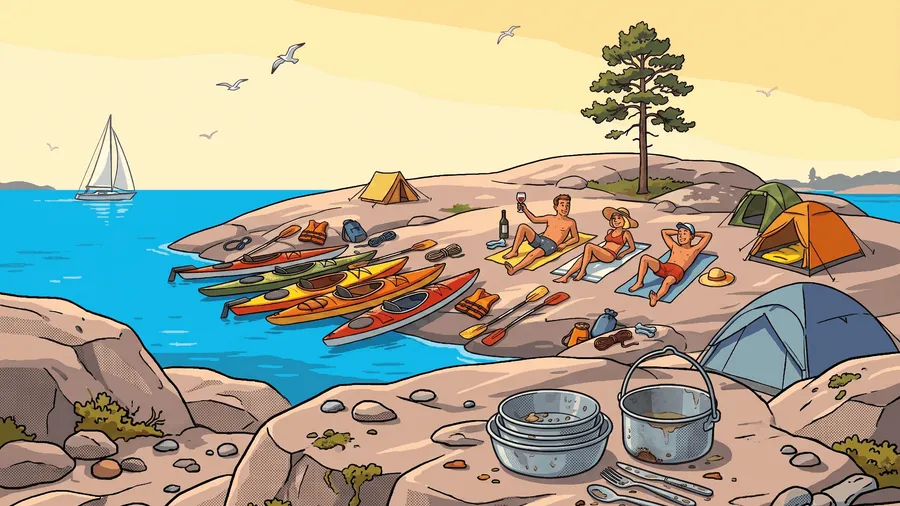
- Långholmen — a former prison island: swimming spots, rocks, views of the City Hall, kayak rentals.
- Tantolunden (Södermalm) — allotment gardens, a beach, grill areas, and a sledding hill in winter.
- Vitabergsparken (SoFo) — a hill with city views, free concerts in the amphitheater in summer.
- Rålambshovsparken (Kungsholmen) — a skatepark, a beach view of the City Hall, lots of sports areas.
- Skinnarviksberget — the highest natural point in the center, the best sunset in the city.
- Kungsträdgården — the central “city living room”: cherry blossoms in April, an ice rink in winter.
- Södermalm green belt: Nackareservatet and Årstaskogen — a forest just 15 minutes from the center.
- Tyresta National Park — top-tier wild nature just 30–40 minutes from the city: a true primeval forest — one of the largest untouched in southern Sweden, with pines up to 400 years old, mossy rocks, and forest lakes where you can swim in total silence. A deep taiga feeling an hour from the metropolis — see the “Outdoors in and around the city” section for routes and how to get there.
Swimming in the city and surroundings
Stockholm is one of the few capitals where the water is so clean that people swim right in the center. The municipality has 36 official beaches (badplats) on Lake Mälaren, Saltsjön, and smaller lakes — with sand, piers, and rocks to choose from.
- Within the city: Långholmsbadet and Långholmen rocks (Hornstull metro), Smedsuddsbadet by Rålambshovsparken, Fredhällsbadet (swimming from rocks, a local favorite after work), Tantobadet (Södermalm), Brunnsvikens strandbad by Hagaparken.
- Important: much of the water area in the very center is a port zone. Swimming there is forbidden (badförbud). The list of allowed spots and a beach search can be found at parker.stockholm.
- Lakes and surroundings: Hellasgården (Lake Källtorpssjön, swimming + sauna all year round, ice hole in winter), Flatenbadet, Hökarängsbadet (Lake Drevviken), the forest lakes of Tyresta and Paradiset; in the archipelago — Grinda, and Trouville beach on Sandhamn.
- Water cleanliness and temperature — maps:
- Badplatsen (havochvatten.se) — the official map of the marine agency: fresh water tests, quality classification, temperature, warnings against swimming (avrådan), and algal blooms — the main source.
- City Dashboard — current water quality for all 36 city beaches (tested from late May to mid-August, weeks 22–33).
- svenska-badplatser.se — an aggregator of 2600+ Swedish beaches: daily updated temperatures and statuses + top warmest beaches.
- On site, signs with the latest test results are posted at the beach entrance.
- Practical advice: water warms up to ~18–22 °C by July (lakes are warmer than Baltic bays). After heavy rains, water quality temporarily drops — check the map before going. In mid-summer, watch out for blue-green algae (algblomning) warnings — dangerous for kids and dogs.
Traditional saunas and sea baths (Kallbadhus)
- Historical spas in the city: luxurious early 20th-century complexes right in the center — Centralbadet (an Art Nouveau oasis with saunas and a pool) and Sturebadet.
- Kallbadhus (cold bathhouses): a classic Swedish tradition. These are wooden structures built on stilts over the sea with saunas and steps leading directly into the open water. The bathhouses are usually separated into men’s and women’s sides, as people typically bathe and take saunas naked. A great example near the city is Saltsjöbadens friluftsbad (take the Saltsjöbanan to get there).
- There is also an excellent sauna with year-round lake swimming at Hellasgården (see above).
Kayak rental
How to search:
- Google “hyra kajak + neighborhood”
- Search Google Maps for “kajak”. “Uthyrning” = rental.
- Or check the stations of the Kayakomat network (24/7 self-service: book online, get a code via SMS). Note that kayaks there are of basic/medium quality; classic rental stations usually offer higher-class equipment.
All rentals include a life jacket, paddle, and spray skirt.
Price estimate (2026):
| Type | 2 hours | 4 hours | Day |
|---|---|---|---|
| Single kayak | ~290–330 SEK | ~390–500 SEK | ~690–950 SEK |
| Double kayak | ~580–660 SEK | ~780–1000 SEK | ~990–1900 SEK |
| SUP | ~270–330 SEK | ~370 SEK | ~670 SEK |
Beautiful routes: the loop around Kungsholmen (~3–4 hours), Djurgårdskanalen, Årstaviken.
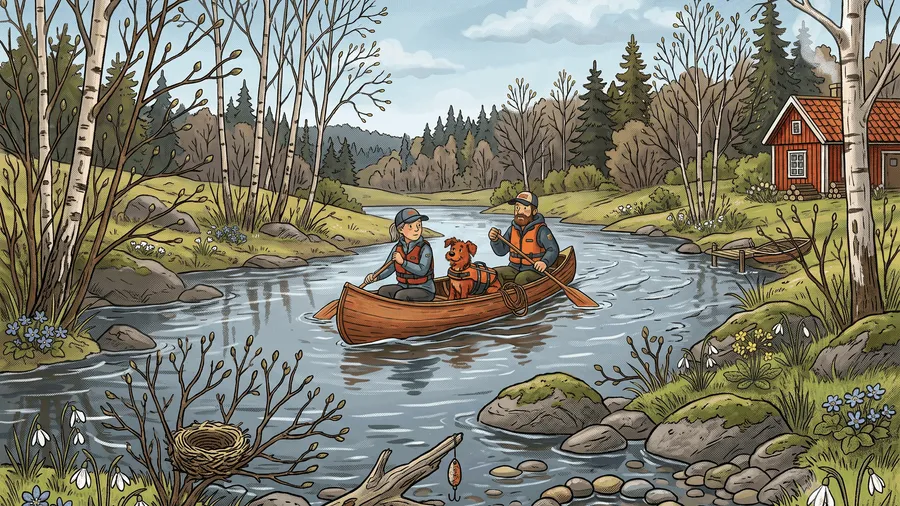
Multi-day paddling is covered in separate guides: Sea kayaking in Sweden (sea kayaking in the archipelago) and Canoeing Rivers and Canals in Sweden (canoeing on rivers, lake systems, and canals — the nearest “wild” lake chain, Marvikarna, is a 40-minute train ride from the city).
- Safety: before going on the water, always check the wind speed and wave direction forecast — for example, using the app or website Windy.com. Weather in the archipelago can change rapidly.
Popular trails near Stockholm
- Tyresta National Park (30–40 min from the city, bus 807/809 from Gullmarsplan) — primeval forest with 400-year-old pines. Top route: the lakes loop Sjöarna (~10 km), or Barnvagnsslingan from Tyresta by village for a short walk. Trails are marked with colored signs. Trails on Naturkartan.
- Hellasgården / Nackareservatet (15 min from Slussen, bus 401) — lakes, trails, ice skating in winter, sauna with an ice hole. Trails on Naturkartan.
- Sörmlandsleden — ~1000 km, 62 stages; the first sections start in southern Stockholm (from Björkhagen) — great for day hikes. Stages on Naturkartan.
- Stockholm Archipelago Trail — a new trail (since autumn 2024) crossing 21 archipelago islands from Arholma to Landsort; sections are connected by Waxholmsbolaget ferries. Stages and planner: stockholmarchipelagotrail.com (Naturkartan only has some stages).
- Paradiset (Huddinge) — nature reserve with the Samslingan loop (~5 km) and swimming in forest lakes. Trails on Naturkartan.
- Roslagsleden — 190 km “in the footsteps of Vikings” through Roslagen: 11 stages from Danderyd on the edge of Stockholm to Grisslehamn on the coast; early stages are easily reached by public transport for day hikes. Stages on Naturkartan.
- Upplandsleden — a network of trails north of the city, through Uppland. Stages on Naturkartan.
- Tools: Naturkartan (official trails, campsites, wind shelters), AllTrails/Komoot (tracks and reviews). Sweden has Allemansrätten — the right of public access to nature: you can walk and pitch a tent for 1–2 nights almost anywhere, without disturbing homes or nature.
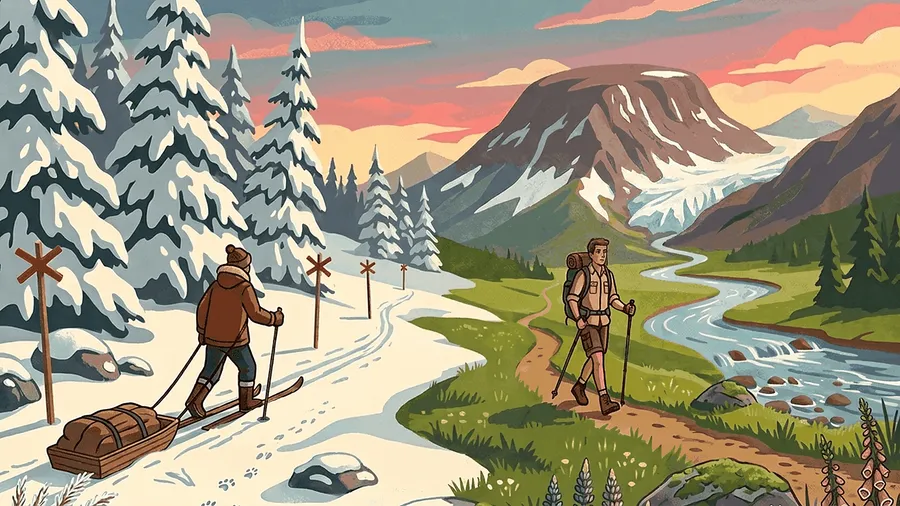
More details on hikes and multi-day treks in Sweden (the STF system, gear, safety) are in the guide Hiking & Winter Touring in Sweden; an English overview is at Hiking in Sweden (Visit Sweden).
Equipment rental
You don’t need to buy a tent or sleeping bag for just one trip. In Stockholm, outdoor gear is easy to rent or even borrow for free.
- Fritidsbanken — an equipment “library”: everything is free for 14 days (can be extended if not booked). No membership or deposit required — just ID and a short form. The inventory depends on the location (second-hand but in good condition): tents, skis, skates, life jackets, balls, sometimes bikes. Addresses are at fritidsbanken.se.
- City fritidsbibliotek — Stockholm municipality runs its own “gear libraries” and street activity boxes on the same free basis: map of spots at motionera.stockholm.
- Naturkompaniet — rentals in chain stores (in the center — Kungsgatan 4 and Sveavägen 62): Fjällräven tents, backpacks (including kids’ backpacks and carriers), camp stoves (~100 SEK/day, 400/week), and pulks in winter. You can rent for up to 2 weeks, pay upon pickup at the store. They also offer second-hand gear and repairs.
- HikeHire — online rental of lightweight hiking gear (Hilleberg, Haglöfs, Therm-a-Rest) with delivery: a sleeping bag is ~150 SEK/day (275/week), a ready-to-go solo kit “tent + sleeping bag + sleeping pad + backpack” is ~715 SEK/day, 1435/week.
- Hygglo — rental from individuals: from tents and stoves to complete friluftspaket (~250 SEK/day, ~990/week); insurance without excess is included.
- How else to search: google “hyra friluftsutrustning” + city/district; for kayaks and bikes, see the specific sections above.
Campsites, vandrarhem (hostels) and stuga rental
Campsites in and around the city
A Swedish campsite is an equipped area for tents, caravans, and motorhomes. It has service buildings (showers, toilets, kitchens, laundry, electricity hookups). Almost always, there are simple cabins (stugas) available per night — a budget alternative to a hotel. Quality is rated in stars (1–5). Stockholm is a rare capital where a couple of campsites are located right inside the city, within walking distance to a metro station and near the water.
- Where to find campsites:
- camping.se — the official portal of the Swedish camping association (SCR) with a map, star ratings, and booking;
- husvagn.se — all campsites in Stockholm County on a map (900+ across Sweden, with filters for facilities, water views, and year-round opening);
- Campcation — online booking for pitches and cabins at campsites;
- visitskargarden.se for the archipelago;
- or search online maps for “camping”.
- Price estimate (2026): a pitch for a tent/caravan is ~250–450 SEK/night in high season, a simple stuga at a campsite is ~600–1200 SEK/night.
- Wild camping: under Allemansrätten, you can stay 1–2 nights for free almost anywhere. In national parks and reserves, only in designated spots.
Vandrarhem (hostels)
Vandrarhem (literally “wanderer’s home”) is the Swedish version of a hostel, but without the “youth party” vibe. Families with kids, couples, and pensioners stay here normally. The format: inexpensive private or shared rooms + a shared kitchen and living room. You handle some of the chores yourself. The largest network is the non-profit STF, but there is also the independent SVIF network and many private vandrarhem.
- STF (Swedish Tourist Association) — the largest network, often in the best locations and unusual buildings (a ship, a lighthouse, an archipelago island). Prices are shown for members. Without membership, you pay an extra ~50 SEK/night per adult (25 SEK for a child). The membership pays off if you stay several nights.
- SVIF — association of independent vandrarhem across Sweden — no membership fees. Plus non-chain private hostels — easily found via Booking and Hostelworld using the “hostel” filter.
- You can also search online maps for “Vandrarhem”.
- Self-service format: shared kitchen, bring your own bed linen or rent it, clean the room before checking out. Breakfast/cafe is often available. Great for families (multi-bed rooms).
- In the archipelago: vandrarhem on Möja (mojavandrarhem.se), Gällnö (gallno.se), Grinda, Utö, Finnhamn — perfect bases for island hopping and the Stockholm Archipelago Trail. Book well in advance for the summer.
- Estimate: a bed in a dorm is ~300–450 SEK, a private room is ~700–1200 SEK/night.
Renting stugas (cabins)
A stuga is a Swedish summer cabin, a national institution: classically, a red house with white corners by the water or in the forest. Renting a stuga is the most typical Swedish way to enjoy nature comfortably: your own house, kitchen, often a sauna, a boat, or a dock. They are rented out by individuals (via aggregators) as well as foundations/agencies. Around Stockholm, the main choices are the archipelago and Roslagen.
- Skärgårdsstiftelsen — the archipelago foundation rents out simple, authentic stugas directly: Gålö (stugas and mini-apartments ~20 m², May 1 – Nov 2, near cliffs, swimming, and trails) and Fjärdlång (a small cottage (torp) of 33 m² without electricity: water from a pump, outdoor toilet, private sauna at the pier; May 8 – Sept 20, reached by a Waxholmsbolaget boat). Also stugas on Utö.
- Private stuga aggregators: Stugknuten, Stugbasen, Novasol — thousands of cabins in the archipelago (Värmdö, Ljusterö, Ingarö, Väddö) and Roslagen; Airbnb also works.
- Stockholm Skärgårdsstugor — a local agency (20 years running), offering verified waterfront houses on Värmdö and across the archipelago, from simple cabins to villas with private bays/docks.
- STF also rents out entire stugas.
- Estimate: a simple stuga is ~4000–8000 SEK/week. A waterfront house in high season is 10,000–25,000+ SEK/week. Rentals are usually weekly (Saturday–Saturday). Summer dates are booked up as early as winter or spring.
- “Stuga” nuances: standards are often basic. Bring your own bed linen or pay extra. Final cleaning is done separately or by yourself. Distant islands might lack electricity or running water (that is part of the charm).
Lake ice skating in winter (långfärdsskridskor)
Skating on natural lake and bay ice (naturis) is one of Stockholm’s main winter traditions. The city is called an “El Dorado” for långfärdsskridskor — long touring blades that attach to hiking boots. They let you glide for dozens of kilometers across Mälardalen lakes and the archipelago.
- Plowed tracks on lakes (plogade sjöisbanor): when the ice forms ~15–20 cm of solid “core” ice (kärnis), the city clears circular tracks on lakes (Drevviken, Långsjön, etc., up to 3+ km long). A map of official tracks is at motionera.stockholm/hitta-sjoisbanor. Current plowing statuses are on a dedicated status page. Neighboring municipalities (Nacka, Upplands Väsby, etc.) clear their own lakes — check their websites and Naturkartan.
- Season: usually January–February (in cold winters, from December to early March). It all depends on sustained freezing temperatures. If there is no natural ice, the city has flooded and artificial rinks (Kungsträdgården, Vasaparken — open roughly November–March regardless of weather). Full list at motionera.stockholm.
- Safety is paramount: even on plowed tracks, skating always carries a small risk as ice thickness varies. Rules: never skate alone (at least make sure there are other people on the track). Do not leave the track. Carry proper safety gear. A helmet is recommended. Full rules are at issakerhet.se (Ice Safety Council).
- Classic urban route: “Norra Förortstraversen” — a chain of bays (Brunnsviken — Edsviken — Norrviken) with short walks in between — starting right at Norrtull.
- For beginners without experience or off-track gear: guided tours with full equipment and instructions — Stockholm Adventures and ICEguide, from ~1900–2100 SEK per day. Skates and ice claws (isdubbar) can also be borrowed for free at Fritidsbanken (see the “Equipment rental” section).
Downhill skiing in the city and surroundings
There are no real mountains in Stockholm, but there are about ten small slopes with artificial snowmaking and lighting. They are perfect for an evening session after work, kids, or a warm-up before a mountain trip. For “real” skiing, locals do day trips to resorts in southern Dalarna and Gästrikland (see below). Cross-country skiing (längdskidor) is a big separate topic: the city’s konstsnö loops in Ågesta and Hellasgården, resorts, and trail statuses are covered in the guide Cross-Country Skiing in Sweden.
- Slopes within and near the city:
- Hammarbybacken (SkiStar) — an artificial hill right in the city (~6 km from the center, by Hammarby sjöstad): 4 runs, 4 lifts, an 83 m drop, the longest run is 730 m, plus a snow park. An adult day skipass is ~250–335 SEK. There is a SkiStarshop rental at the bottom. The summit offers the best panorama of southern Stockholm.
- Flottsbro (Huddinge, ~20 min from the center) — Stockholm’s largest ski area: 5 runs (including a race track and kids’ zone), 3 lifts, rentals, a ski school, a restaurant with a slope view, stugas, and a sledding hill. Online tickets are cheaper.
- Also: Väsjöbacken (Sollentuna, 4 runs), Ekholmsnäsbacken (Lidingö), Ekebyhovsbacken (Ekerö), and about ten more small slopes. The full list with parameters and prices (17 slopes near Stockholm) is available at Freeride and Åka Skidor.
- Season for city slopes: roughly December–March. This depends entirely on stable freezing temperatures for the snow cannons — follow their websites/social media for opening dates.
- Day trips to resorts in southern Dalarna and nearby: the “leave in the morning — ski all day — home by dinner” format is a national Stockholm winter classic.
- Romme Alpin (13 km from Borlänge, southern Dalarna, ~2.5 hrs from Stockholm) — Sweden’s largest resort outside the mountain regions: 34 runs, 14 lifts (including 6 six-seat expresses), a 275 m drop. The easiest way without a car is their dedicated ski bus from Cityterminalen (the price includes a round-trip ride + day skipass; runs many days during the season, returns at 15:15–16:15).
- Kungsberget (Järbo, Gästrikland, ~2 hrs) — 25 runs, 14 lifts, a 200 m drop, a large beginners’ area, and snow parks. The Kungsbergsbussen is a direct bus from Cityterminalen, starting from ~410–420 SEK including skipass — the cheapest full day of skiing from Stockholm.
- Practical advice: the resort season is roughly mid-November/December to early April (artificial snow makes them more reliable than city slopes). Book ski buses for weekends and school holidays (sportlov, weeks 7–9) in advance. Full gear rental is available on-site at both resorts (cheaper to book online). Skis can sometimes be borrowed for free at Fritidsbanken (see “Equipment rental”).
Renting motorhomes (Husbil) and caravans (Husvagn)
Traveling in a motorhome (husbil) or with a caravan (husvagn) is one of the most popular ways to explore Sweden. It offers maximum freedom thanks to Allemansrätten and an extensive network of campsites.
- Where to rent (P2P platforms):
- MyCamper — the largest Scandinavian platform for renting motorhomes and caravans directly from owners (like Airbnb for campers). It is on average 40% cheaper than commercial rentals. The booking price includes comprehensive insurance.
- Hygglo — a popular peer-to-peer item rental service that also has a large section for campervans and caravans (insurance included, no deposit required).
- Commercial rentals: large international networks like McRent (station in Bålsta) and Touring Cars offer new vehicles for rent, with pickup points near Arlanda airport or Stockholm.
- Price estimate: renting a caravan (husvagn) costs around 700 SEK/day or 3500 SEK/week. A motorhome or campervan (husbil/campervan) is from 1200 SEK/day or 7000–9000 SEK/week, depending on size. In summer, you must book far in advance.
- Important rules and nuances:
- Driver’s license: a standard category B license is sufficient for driving most motorhomes (husbil) up to 3500 kg. However, towing a heavy caravan (husvagn) often requires a BE or B96 license (depending on the total weight of the car and trailer — always check this with the rental company).
- Where to park overnight (Ställplatser): Sweden has many designated parking areas specifically for motorhomes — ställplatser. There you can refill water, empty tanks, and connect to electricity (usually 150–250 SEK/night). They are easiest to find on the free Swedish map husbil.se/stallplatser/karta/ or via the Campercontact app.
- Parking in nature: you can park for free overnight (up to 24 hours) at regular parking lots and rest stops (rastplats), as long as there are no signs prohibiting it. However, driving off the road onto grass, beaches, or into the forest (terrängkörning) is strictly forbidden. For longer stays, use official campsites (see the “Campsites, vandrarhem and stuga rental” section).
Northern lights
The Northern lights (norrsken) are occasionally visible in Stockholm and Stockholm County. But this is not a regular occurrence like in Kiruna or Abisko. For a noticeable display here, you need a strong geomagnetic storm, clear skies, and minimal city light pollution. In good years, there might be several suitable nights per season. In other years, none at all. Do not count on it as a guaranteed part of your trip.
- When to look: when the sky is dark — roughly from late August to early April. The best time is usually October to March. Check during the evening and night, especially from 22:00 to 02:00. Summer nights are too bright.
- What the forecast means: for Stockholm’s latitude, you usually need a high geomagnetic forecast (around Kp 5–6+). But Kp is just an indicator: cloud cover, current solar wind, and darkness are the deciding factors. Even with a strong forecast, the aurora might be weak. It is often seen better in a phone’s night mode photo than with the naked eye.
- Where to find the forecast:
- AuroraReach: Stockholm — forecast specifically for Stockholm, real-time probability, and notifications.
- NOAA Space Weather Prediction Center — official 30-minute aurora map; check if the oval reaches southern Sweden.
- SpaceWeatherLive — Kp forecast and solar wind data.
- Meteologix Aurora Forecast — an aurora probability map for Sweden, where you can select Stockholm.
- SMHI — cloud cover is more important than a nice Kp: look for clear windows in the hourly forecast.
- Where to go: get away from streetlights and face the northern horizon. Open shorelines and parks on the outskirts are good choices, such as Tyresta, Nackareservatet, Björnö, or archipelago islands. Do not drive far unless there is high activity + clear skies at the same time.
- Practical advice: bring a tripod or rest your phone against something. Turn on night mode/long exposure, turn off the flash. Let your eyes adjust to the darkness for 15–20 minutes. Dress warmly, as you might wait outside for a long time.
Interesting cities 1–1.5 hours from Stockholm
Around Stockholm, there are a dozen cities suitable for day trips. Some can be reached with a regular SL ticket. Others need fast trains like SJ and Mälartåg (which can cost just a few dozen SEK if bought early).
- Norrtälje — the “capital of Roslagen” and one of Sweden’s coziest small towns: pastel 18th-century wooden neighborhoods along the Norrtäljeån river, little bridges, cafes, antique and craft shops, and a lively harbor with boats and ice cream in summer. The northern archipelago begins here (ferries to islands) and the Roslagsleden trail passes nearby. It is the perfect base to experience the “real” coastal Roslagen in one day. And all this with a standard SL ticket: bus 676 from Tekniska högskolan takes ~1 hr 5 mins and runs every ~20 minutes. Ideas and events at roslagen.se.
- Uppsala — the country’s fourth-largest city with Scandinavia’s oldest university: the tallest cathedral in the Nordics, a castle, Linnaeus’ gardens, and Viking burial mounds in Gamla Uppsala. By SJ/Mälartåg train — ~38–40 mins from Central; a cheaper alternative is the pendeltåg taking ~55 mins (SL ticket + UL extra zone fare in the SL app).
- Sigtuna — Sweden’s first city (founded ~980 AD): the oldest street in the country (Stora gatan), rune stones right in the city, medieval church ruins, and the Mälaren waterfront. Using an SL ticket: pendeltåg to Märsta (~35 mins) + bus 570/575 (~20 mins).
- Vaxholm — the “capital of the archipelago”: a fortress on an islet, wooden houses, and fish restaurants. Bus 670 from Tekniska högskolan takes ~45–50 mins on an SL ticket. Going by Waxholmsbolaget boat from Strömkajen (also in the SL zone) is more scenic. The ideal combo is bus there, boat back.
- Mariefred — Gripsholm Castle (royal portrait gallery), charming wooden streets, and in summer, an old narrow-gauge railway with a steam train. Train to Läggesta (~40 mins) + a 10-minute bus/retro train ride. In summer, the S/S Mariefred steamboat sails from central Stockholm (~3.5 hrs — an attraction in itself).
- Trosa — a tiny “edge of the world” (the local joke is “Världens ände”): wooden houses along the canal, a harbor, and pastry shops. Mälartåg to Vagnhärad (~40 mins) + a 10-minute bus, or the direct Trosabussen from Liljeholmen.
- Nyköping — Nyköpingshus Castle (site of the famous “Nyköping Banquet” of 1317), a waterfront with restaurants, and the Sörmland beaches nearby. Mälartåg takes ~1 hr.
- Västerås — a cathedral, the old Kyrkbacken quarter, the Kokpunkten water park in a former steam power plant, and Sweden’s largest burial mound, Anundshög. Mälartåg takes ~1 hr.
- Norrköping — “Sweden’s Manchester”: a unique European industrial landscape of factories above the Motala ström river rapids (the “Iron” building Strykjärnet, the Museum of Work), trams, and street art. Fast SJ train takes ~1 hr 20 mins. On the way is Kolmården station (Scandinavia’s largest zoo, Mälartåg ~1.5 hrs).
- Tip: SJ/Mälartåg tickets get much cheaper if bought a few days in advance. All these destinations work perfectly as day trips without an overnight stay.